Bathroom advice
Bathroom Taps and Mixers: A Buying Guide for the Isle of Man
31 October 2026 · 7 min read
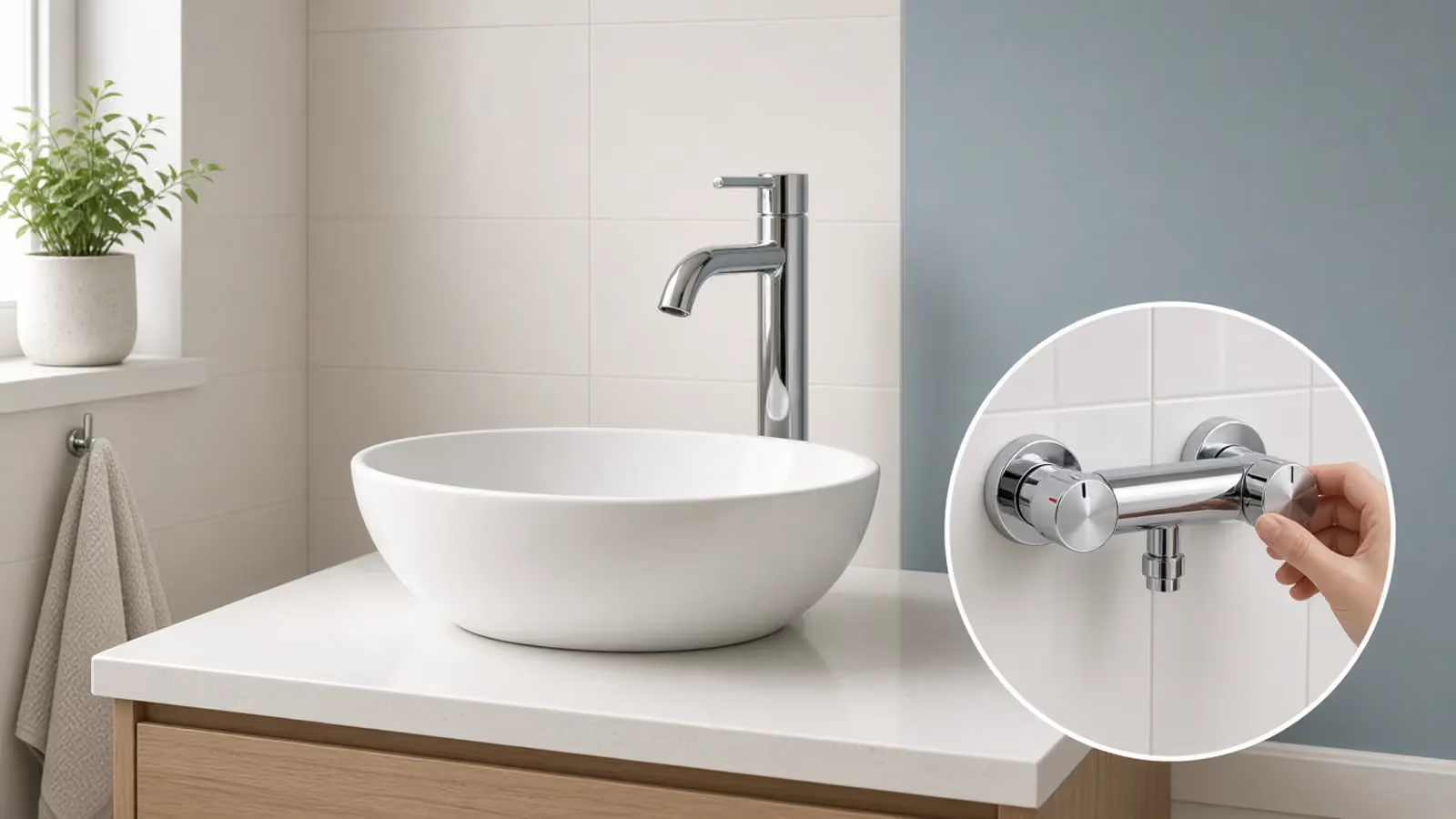
Quick answer: A mixer tap is the simplest, easiest-to-clean choice for most basins, baths and showers, while two separate taps suit a period look and keep each valve simple to service. The decision that matters more than style is matching the tap or valve to how your water is actually supplied. A thermostatic mixer or a tap built for mains pressure can disappoint on a gravity-fed system, and the reverse is also true. Work out your water system first, then choose the finish.
Taps get chosen last and noticed every day. They are the fitting you touch more than any other in the bathroom, and they are also one of the few bathroom products where getting the match to your plumbing wrong is a genuinely common, genuinely annoying mistake. This guide works through the practical decisions in the order they actually matter for a Manx home.
Mixer tap or two separate taps?
A mixer brings hot and cold together through one spout, controlled either by a single lever or by two handles feeding one outlet. It needs either a single tap hole (a monobloc mixer) or, on some basins, three holes for a widespread mixer with separate hot and cold handles either side of the spout.
Two separate taps — one hot, one cold — are the traditional pillar-tap arrangement, still common in period bathrooms and cloakrooms. Each tap has its own, simpler valve, which can make a worn washer or cartridge cheaper to sort out, since you are only ever working on one tap at a time.
Practically, the decision usually comes down to three things:
- Hole count. Count the holes already in your basin or worktop, or decide on them before you order a new one. A single-hole monobloc will not fit a basin drilled for two separate taps without a blanking plate, and vice versa.
- Cleaning. A mixer has fewer crevices around the base, which matters in a family bathroom that gets used daily.
- Look. Separate taps suit a period cottage or a deliberately traditional bathroom; a mixer reads as more contemporary.
Does your water system change what you should buy?
Yes, and this is the part that is easy to skip past when you are choosing on looks alone. Manx homes get their hot and cold water in different ways — some are fed entirely from the mains, including combi boilers and unvented cylinders, and some are gravity-fed from a cold-water cistern in the loft and a vented hot cylinder. Pressure and flow differ a great deal between the two, and our guide to low shower pressure on the Isle of Man goes through why.
A bar mixer or thermostatic valve bought for a mains system can feel disappointing on a gravity-fed supply if it needs more pressure than the cistern height can provide. Conversely, some taps and valves are made specifically for low-pressure gravity systems and will not perform as advertised on high mains pressure without a pressure-reducing valve. Before you choose a shower mixer or a bath-filler mixer in particular, check the manufacturer's minimum pressure and flow figures against your own system, or ask your fitter to measure it at survey.
It is also worth knowing that bathroom taps are not always fed from the same source as your kitchen tap. In many gravity-fed homes the bathroom cold tap comes from the loft cistern rather than straight off the mains. Manx Utilities says water from storage cisterns should not be used for drinking unless the cistern is designed and maintained to keep it wholesome, that water from hot taps should not be used for drinking or cooking, and it strongly advises using only the kitchen cold tap for all drinking and cooking (Manx Utilities, commissioning plumbing systems). That one fact explains a good deal about why a bathroom tap and a kitchen tap can behave so differently even in the same house.
Manual mixers or thermostatic valves?
For a basin, a standard mixer is normally all you need — the risk of a sudden temperature change at a basin is low, and you are in control of both handles or the lever at all times.
For a bath or shower, a thermostatic mixer holds the water at a set temperature even if someone elsewhere in the house runs another hot tap or flushes a toilet, which would otherwise cause a brief, unpleasant swing in temperature at the shower. A manual mixer is simpler and usually cheaper, but leaves you to react if the temperature shifts.
Thermostatic valves depend on a minimum flow through the valve to regulate properly, which the installation instructions set out for that specific product — the same point our guide to low shower pressure makes about shower pumps needing a minimum gravity flow before they will work as intended. If you are gravity-fed and considering a thermostatic bar shower, this is worth checking before you buy rather than after it is tiled in.
What rules apply to taps and pipework on the Island?
Plumbing work on the Isle of Man sits under the Water Supply Byelaws 2002, which Manx Utilities enforces. According to Manx Utilities, the byelaws set requirements for the design, installation and maintenance of plumbing systems, water fittings and water-using appliances, with the aim of preventing waste, misuse and contamination of the water supply (Manx Utilities, Water Supply Byelaws).
Two practical points follow from that:
- Fittings should be approved. Manx Utilities points to the Water Product Approvals Directory, which lists products tested and approved for compliance with the regulations, and to WRAS and the Water Regulations Guidance for further advice (Manx Utilities, commissioning plumbing systems). Ask a supplier or fitter to confirm a product is listed before it is fitted, particularly for anything unusual or bought online.
- Installation work needs an Authorised Person. Manx Utilities says it is a requirement that an Authorised Person is used for installation work, as this gives the client a measure of protection under the regulations, and it can supply a list of them (Manx Utilities, commissioning plumbing systems). If you are not sure whether your job counts, ask before work starts rather than after.
If you are planning a wider bathroom project rather than just swapping taps, our guide to choosing a bathroom fitter on the Isle of Man covers the questions worth asking about who is actually doing the plumbing.
Finishes: what suits a Manx bathroom day to day?
Once the mechanics are settled, finish is genuinely a matter of taste, but a few practical points come up often enough to be worth mentioning:
- Chrome is the easiest finish to match later, since it is the most widely stocked across brands and basin, bath and shower ranges.
- Brushed finishes — brushed nickel or brushed brass — tend to show water spots and limescale less obviously than polished chrome, which can suit a busy family bathroom.
- Matte black reads as a strong, deliberate choice, but limescale and dried water marks show up more clearly against it, so it asks for a bit more routine wiping, especially in hard-water areas.
- Wall-mounted taps keep the basin or bath surround clear and easier to wipe down, but they need the supply pipework positioned correctly behind the wall before tiling, which is a first-fix decision, not something to settle on installation day.
Questions worth asking before you order
- How many tap holes does your basin, bath or worktop have, and does the product you want match that?
- What minimum pressure and flow does the tap, mixer or thermostatic valve need, and how does that compare with your own water system?
- Is the product listed in the Water Product Approvals Directory, and can the supplier confirm that in writing?
- Is the installer an Authorised Person under the Water Supply Byelaws 2002?
- For a wall-mounted tap, is the supply position agreed before the walls are boarded and tiled?
Getting these answered before you buy is a great deal cheaper than discovering the answer after the tap is fitted. If you are planning taps and mixers as part of a wider refit, the bathroom planning checklist covers the other first-fix decisions worth settling at the same time, and the online designer lets you try layouts and finishes against your own room before anything is ordered.
Sources
- Manx Utilities, Water Supply Byelaws
- Manx Utilities, Commissioning plumbing systems
Frequently asked questions
Should I choose a mixer tap or two separate taps for a bathroom basin?
A mixer is the easier fitting to keep clean, because there is one spout and one set of holes to deal with rather than two. Two separate taps suit a period or heritage look and are simpler to repair, since each tap has its own, smaller valve. Both need the right number of tap holes in the basin or worktop, so check that before you order.
Will a thermostatic shower mixer work on a gravity-fed system?
It can, but check the manufacturer's installation instructions before you buy. Thermostatic valves need a minimum flow and pressure to hold a set temperature, and that minimum is harder to reach on a gravity-fed system than on mains. If your hot water comes from a loft cistern rather than the mains, confirm the valve suits a gravity supply, or ask a plumber to check your system first.
Can I drink water from a bathroom tap?
It is best not to. Manx Utilities says water from hot taps should not be used for drinking or cooking, that water from storage cisterns should not be drunk unless the cistern is designed and maintained to keep it wholesome, and it strongly advises using only the kitchen cold tap for all drinking and cooking. In many homes a bathroom cold tap is fed from a loft cistern, so the kitchen cold tap is the safe choice.
Do bathroom taps need to be approved on the Isle of Man?
Manx Utilities points people to the Water Product Approvals Directory, which lists products tested and approved for compliance with the regulations, and to WRAS for guidance. Asking your supplier or fitter to confirm a tap or mixer is listed there is a simple way to check it suits the Water Supply Byelaws 2002.
Do I need an Authorised Person to fit new bathroom taps on the Isle of Man?
Manx Utilities says it is a requirement that an Authorised Person is used for installation work under the Water Supply Byelaws 2002, because it gives the client a measure of protection, and it can provide a list of Authorised Persons. If you are unsure whether your job counts, ask your fitter or call the Byelaws Inspector before work starts.
Get your guide price in minutes
Design your bathroom online and get an instant guide price — confirmed at a home survey.
Start your design